Platform's Guidelines
Author’s Note
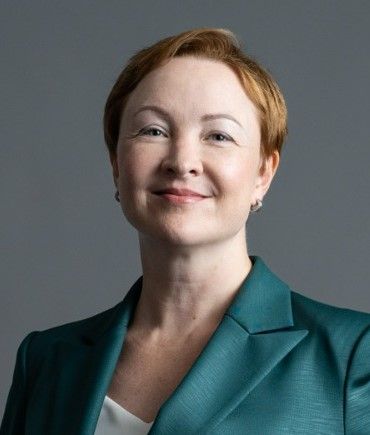
My name is Tatiana Stanovaya, and I am a political analyst specialising in Russia. StarkTalk is my personal initiative. Over the last decade or so, like many of my colleagues, I have taken part in various closed meetings where politicians, officials and experts have met informally to discuss current events against the backdrop of growing confrontation between Russia and the West. At the same time, I have derived enormous value from the hundreds of threads on X written by military experts, foreign policy analysts, Russia-watchers and others for the general public—to which I have added my own contributions. However, both of these formats often lack the necessary structure to encourage constructive, ongoing dialogue.
StarkTalk is my humble attempt to encourage meaningful conversations about global strategic security, including—but not limited to—peaceful coexistence between Russia and the West, as well as broader challenges like great power competition, the risk of nuclear conflict, cyber threats and climate security.
Acknowledging the precarious state of global affairs—including the ongoing Russian war against Ukraine—I decided to create StarkTalk as a space for professionals: experts in strategic security, foreign policy, arms control, military matters and related fields worldwide. The platform emphasises competence, professionalism and respect. The objective is to shield discussions from those acting on behalf of governments or political entities, as well as those pushing a specific political agenda.
The strategic context
Over the past 30 years, the international security architecture created during the Cold War has gradually eroded. Arms-control regimes, confidence-building measures and informal stabilising mechanisms have receded or disappeared, often without being replaced by viable alternatives. As a result, the global system has become less predictable and more prone to escalation.
At the same time, the security environment has grown more complex. Terrorism and extremist actors have not disappeared but have instead been complemented by the rapid spread of hybrid threats—cyber operations, disinformation, economic coercion and other tools that deliberately blur the line between war and peace, complicating traditional responses.
War has also returned to Europe. Russia’s attack on Ukraine marked a profound rupture in the post-Cold War order and demonstrated that full-scale interstate conflict remains possible on the European continent. Moreover, the nature of warfare itself is changing. Technological breakthroughs—most visibly the widespread use of drones and autonomous systems—are reshaping military tactics, escalation dynamics and strategic calculations.
These developments have coincided with broader structural shifts: dramatic changes in US foreign policy priorities; new strains on transatlantic unity; growing uncertainty in the Arctic; China’s resurgence as a global power; the rising influence of the Global South; and persistent internal crises within the European Union. Together, these trends create a strategic environment in which established frameworks no longer suffice, while new ones remain contested and incomplete.
It is in this context, with decision-makers struggling to interpret the rapidly changing global order, that serious professional dialogue becomes indispensable. StarkTalk was created precisely with this in mind: as a space where experienced professionals can speak candidly, challenge assumptions, and engage in structured debate about the choices and risks shaping global security today.
Purpose of the Project
StarkTalk will operate as an exclusive space. Administrators have the authority to selectively approve registrations with the goal of ensuring that discussions remain businesslike and constructive. Our aim is to maintain an environment free from politicisation, blame-shifting and score-settling. Instead, we hope to encourage factual, solution-oriented approaches to fiercely contested topics (including the Russian war against Ukraine).
StarkTalk is not connected to any institution. It is funded entirely from my personal resources and is independent of my work at the Carnegie Russia Eurasia Centre and R.Politik. Members and contributors are not paid, the platform has no commercial purpose, and it represents a purely voluntary initiative to bring together people who share the belief that communication between experts remains a necessary, indispensable part of policymaking—especially in an environment where governmental decision-making is challenged by the erosion of institutions, the devaluation of international law, shifting politics and short-term planning.
While my initial idea was to focus primarily on relations between Russia and the West, after some reflection, I decided to expand this platform to encompass a broader range of topics covering long-term global security. The emphasis will be on practical ideas—ways to prevent the further deterioration of the international security architecture and, however modestly, contribute to its future reorganisation through the revival of shared norms and rules. After all, we all share one planet, and no one is going anywhere.
However, there are some necessary limitations:
We invite members and contributors primarily from the fields of strategic security, foreign policy, arms control and military affairs to join us. That said, we also welcome other professionals who can meaningfully contribute, including economists, lawyers and academics across related disciplines, as well as former diplomats and officials. Non-members may view all open topics (closed, members-only discussions may be introduced later).
We do not support political activism or overt bias—whether uncritically pro- or anti-Russia, pro- or anti-West, or unduly favouring any other geopolitical entity. Of course, we allow and encourage professional, evidence-based critique, including on hotly contested topics (such as the Russian war against Ukraine).
StarkTalk recognizes that every participant brings their own perspective, shaped by professional background and experience. The platform does not demand that experts be “neutral” in the sense of having no position. On the contrary, its purpose is to present contrasting viewpoints in a structured, respectful way that facilitates engagement.
For those with concerns for their personal or professional security, anonymous registration is available. These accounts will only display the user's country, professional domain and a brief overview of their experience. We will verify each case individually and respond promptly to any attempts to abuse the platform or disrespect other participants.
The platform does not allow:
- Content that is purely propagandistic—i.e. designed solely to promote a political agenda without engaging in substantive argument.
- Ad hominem attacks that delegitimise or target other participants personally.
- Efforts to shift discussions towards blame, labelling or score-settling, rather than constructive debate.
The moderators and administrators are not there to judge which opinions are “right” or “wrong”, but to ensure debates remain professional, relevant and mutually respectful.
StarkTalk is not an attempt to attract publicity, traffic or visibility. I will consider this project a success if it brings together even a small group of experts who can exchange views candidly and professionally.
— Tatiana Stanovaya