Moscow Between Beijing and Washington
Since Donald Trump returned to the White House, his declared ambition to “un-unite” Russia and China has brought the deepening Moscow-Beijing partnership into sharp focus. Years of Western sanctions have made Russia significantly more dependent on China for markets, finance, technology and energy exports. Bilateral trade now approaches $250 billion annually — dwarfing any realistic U.S. alternative — while Moscow’s economic isolation from the West has grown.
This situation has added a new strategic layer to efforts to negotiate an end to the war in Ukraine. Although the Kremlin is conscious of the risks of over-dependence on its giant neighbour, the strengthened partnership with China appears to have given Moscow greater confidence in pressing its maximalist demands regarding Ukrainian sovereignty and territorial integrity. This raises a central question: Can the United States effectively exploit or target this Russia-China unity to advance its own interests, and how realistic is such an approach?
The core dilemma is therefore this: Has China’s growing influence and Russia’s resulting liabilities become a meaningful factor in how the Kremlin handles the Trump administration — allowing Moscow to dangle the prospect of a “reverse Kissinger” realignment with Washington to extract a favourable Ukraine settlement and gain strategic breathing space? Or is the China factor ultimately overstated, with both sides primarily driven by the imperative to end the war rather than by any fundamental redesign of the Russia-China relationship?
Alexander Gabuev and Samuel Charap present their contrasting assessments of the role China is playing in the Kremlin’s strategy toward Trump. Members are invited to submit focused questions after the positions are published.
👉 View contributor positions

Alexander Gabuev
Director at Carnegie Russia Eurasia Center

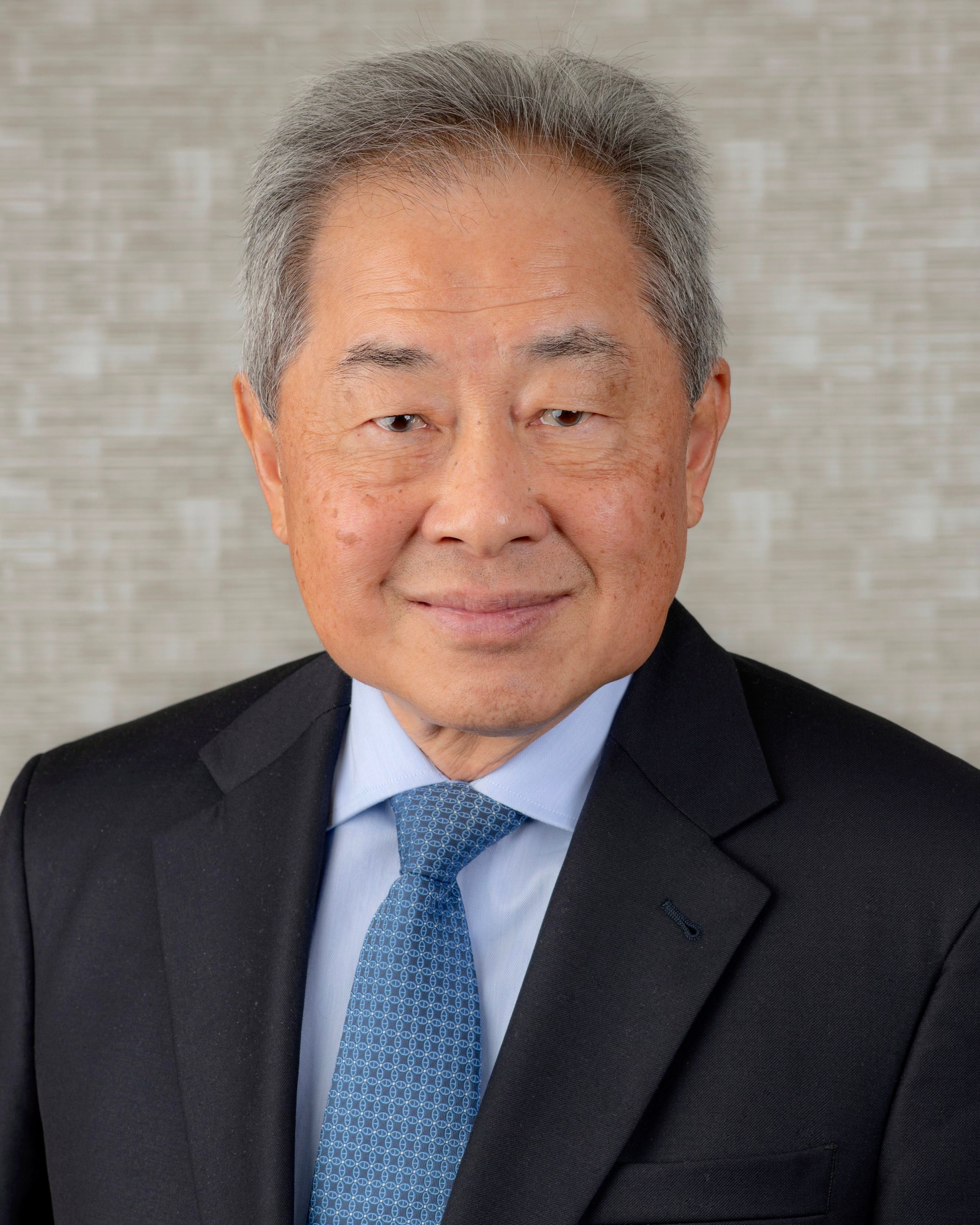
Samuel Charap
Distinguished Chair in Russia and Eurasia Policy at RAND
Samuel Charap: China Looms Large, but Drives Little
The China factor looms large in public discussions of U.S.-Russia relations. Indeed, policymakers in the this (and past) administrations expressed concerns that support for Ukraine has diverted important resources from what they consider the top priority for U.S. foreign policy: countering China. Moreover, senior officials worried that the Russia-Ukraine war has accelerated the deepening of partnership between Moscow and Beijing. In the early weeks of his second term, Trump himself said, “As a student of history, which I am — and I’ve watched it all — the first thing you learn is you don’t want Russia and China to get together.”
But there is little evidence that the China factor has been decisive in determining U.S. policy toward Russia. The administration has largely addressed the concerns about resource expenditure on the war by shifting the financial burden to European allies through NATO’s PURL program, which enables those allies to purchase American-made weapons. While Washington remains concerned about Beijing-Moscow ties, Trump’s National Security Strategy does not identify reduction or undermining of Russia-China cooperation as a goal. The United States does not seek to push Russia and China together, but neither is it willing to fundamentally shift its approach toward one or the other to drive them apart.
Currently, the top U.S. priority in its relations with Russia is to end the Russia-Ukraine war. While the potential that an end to the war might lessen Russian dependence on China is clear, that possibility does not appear to be a major driver of the peace push.
For Russia, the basic calculus that its relationship with China is far more strategically important than anything the United States could plausibly offer has not changed. That calculus is a function of both material realities (i.e., Russia’s vastly larger economic stakes with China) and an assessment that U.S. commitments lack credibility and are easily reversed when administrations change. But Russia’s increasingly lopsided relationship with China has created strategic liabilities for Moscow. While Russian leaders would never say so publicly, they doubtless are concerned that Beijing might leverage Moscow’s dependence for its own purposes. And that dependence will only grow deeper the longer Russia’s economic isolation from the United States, Europe, and U.S. allies in Asia persists. To the degree that ending that isolation lies through ending the war in Ukraine, Moscow does have a China-driven incentive to engage in the U.S.-led negotiation process.
- Samuel Charap
Your Voice in the Topic
Got a question about the topic? Our experts are here to share their insights — but only members can ask. Want in? Become a member to join the conversation and get your questions answered directly.

Alex Kolbin
Consultant at Independent
I would add a third possibility to both Sam Charap’s and Alexander Gabuev's arguments.
Washington could come to see Beijing’s leverage over Moscow as useful in any post-war stabilization scenario. Russia’s deeper dependence on China is not only a strategic liability for Moscow; it is also a potential tool for managing situation after the war (or in case of escalation attempts) - especially if Russia faces internal economic (political?) stress. In that sense, any future US “economic cooperation” with Russia may increasingly run through China or depend on Chinese consent. The US may not like this, but it may tolerate it if Beijing can help prevent further escalation, contain Russian instability, and keep Moscow economically manageable.
China also has its own reasons to avoid escalation in Europe. With US-China relations unstable, Europe remains one of Beijing’s essential export markets in Eurasia. A wider European war or prolonged instability is not in China’s interest. The same logic BTW may partly explain Lukashenko’s recent behavior...
Waiting for answer
Member Insights
These are personal ideas shared by members. They don’t reflect the official stance of the platform — just thoughtful takes from inside the community.
Alex Kolbin
Consultant at Independent
I would add a third possibility to both Sam Charap’s and Alexander Gabuev's arguments.
Washington could come to see Beijing’s leverage over Moscow as useful in any post-war stabilization scenario. Russia’s deeper dependence on China is not only a strategic liability for Moscow; it is also a potential tool for managing situation after the war (or in case of escalation attempts) - especially if Russia faces internal economic (political?) stress. In that sense, any future US “economic cooperation” with Russia may increasingly run through China or depend on Chinese consent. The US may not like this, but it may tolerate it if Beijing can help prevent further escalation, contain Russian instability, and keep Moscow economically manageable.
China also has its own reasons to avoid escalation in Europe. With US-China relations unstable, Europe remains one of Beijing’s essential export markets in Eurasia. A wider European war or prolonged instability is not in China’s interest. The same logic BTW may partly explain Lukashenko’s recent behavior...
Want to launch your own topic or contribute to an existing discussion on StarkTalk?
📩 Contact us at contact@starktalk.com with a brief introduction of yourself, your expertise, and the topic you would like to propose.